
About the Department
YJR DMS College of Engineering
The Department of Electronics and Communication Engineering, a consistently top ranked department, is recognized by AICTE, which has a rich heritage and a strong reputation for R&D activities of internationally acclaimed standards, predominantly in the areas of Internet of Things, Drones technology, Communications, Signal Processing and Microelectronics.
The college has initiated the Department of Electronics and Communication Engineering in the year of 1980 with 60 students intake in undergraduate programme, 18 intake in post graduate programme.
Presently there are 2 Professors, 6 Assistant Professors and sufficient numbers of technicians are working for the department. Many of our faculty is currently pursuing their Ph.D.
The Department of Electronics and Communication Engineering (ECE) is committed to providing quality technical education, fostering innovation, and developing competent engineers equipped to meet the evolving needs of industry and society. The department provides a vibrant academic environment that encourages students to develop strong fundamentals, practical skills, creativity, professional ethics, and a spirit of lifelong learning.
With a dedicated and experienced faculty team, the department emphasizes teaching excellence, hands-on learning, research, innovation, industry interaction, and professional development. Students are encouraged to participate in technical activities, projects, internships, workshops, seminars, and co-curricular activities that complement classroom learning and prepare them for successful careers and higher studies.
The department strives to create an inclusive and supportive academic environment where students and faculty work collaboratively toward academic and professional excellence. Through industry collaborations, interdisciplinary initiatives, research activities, and academic partnerships, the department continuously works toward developing centers of excellence and strengthening the connection between engineering education and real-world applications.
Our commitment is to provide high-quality engineering education and training that contributes meaningfully to society, while continuously improving our academic practices and professional relationships. Through academic integrity, teamwork, creativity, and responsible engineering practices, the ECE Department aspires to be a preferred destination for students, faculty, industry partners, and employers.
Courses Offered
Undergraduate and Postgraduate Programs
B.Tech in Electronics and Communication Engineering
Undergraduate programme in Electronics and Communication Engineering designed to develop strong technical fundamentals, practical skills, innovation and professional capabilities.
UNDER-GRADUATION PROGRAMDiploma in Electronics & Communication Engineering
Diploma programme in Electronics & Communication Engineering providing practical and technical knowledge for electronics and communication engineering applications.
DIPLOMA PROGRAMM.Tech in Digital Electronics and Communication Systems
Postgraduate programme focused on advanced digital electronics and communication systems.
POST-GRADUATION PROGRAMVision & Mission
Vision and Mission of the Department of Electronics & Communication Engineering
Vision of the Department
To produce dedicated and high-quality Electronics and Communication Engineers who are useful to society and capable of practising their profession with honesty, integrity, and commitment to technological excellence.
Department Mission
The Department is committed to serving as a sustainable academic and technological resource by providing quality education, practical learning, and student development opportunities in Electronics and Communication Engineering that support learners in achieving academic, professional, and career success.
Program Outcomes
Graduates of the programme are expected to achieve the following outcomes.
Engineering Knowledge
Apply knowledge of mathematics, natural science, computing, engineering fundamentals and an engineering specialization as specified in WK1 to WK4 respectively to develop solutions to complex engineering problems.
Problem Analysis
Identify, formulate, review research literature and analyze complex engineering problems reaching substantiated conclusions with consideration for sustainable development. (WK1 to WK4)
Design / Development of Solutions
Design creative solutions for complex engineering problems and design or develop systems, components and processes to meet identified needs with consideration for public health and safety, whole-life cost, net zero carbon, culture, society and environment. (WK5)
Conduct Investigations of Complex Problems
Conduct investigations of complex engineering problems using research-based knowledge including design of experiments, modelling, analysis and interpretation of data to provide valid conclusions. (WK8)
Engineering Tool Usage
Create, select and apply appropriate techniques, resources and modern engineering and IT tools, including prediction and modelling recognizing their limitations to solve complex engineering problems. (WK2 and WK6)
The Engineer and The World
Analyze and evaluate societal and environmental aspects while solving complex engineering problems for their impact on sustainability with reference to economy, health, safety, legal framework, culture and environment. (WK1, WK5 and WK7)
Ethics
Apply ethical principles and commit to professional ethics, human values, diversity and inclusion; adhere to national and international laws. (WK9)
Individual and Collaborative Team Work
Function effectively as an individual, and as a member or leader in diverse and multidisciplinary teams.
Communication
Communicate effectively and inclusively within the engineering community and society at large, including effective reports, design documentation and presentations considering cultural, language and learning differences.
Project Management and Finance
Apply knowledge and understanding of engineering management principles and economic decision-making and apply these to one's own work, as a member and leader in a team, and to manage projects in multidisciplinary environments.
Life-Long Learning
Recognize the need for, and have the preparation and ability for independent and lifelong learning, adaptability to new and emerging technologies and critical thinking in the broadest context of technological change. (WK8)
Program Specific Outcomes
Program Specific Objectives of the ECE Department
VLSI & Embedded Systems
Utilize specialized software tools and engineering techniques for the design and development of VLSI and Embedded Systems.
Wireless Communication Applications
Innovate and design application-specific electronic circuits and systems for modern wireless communication applications.
Department Facilities
Laboratories and facilities of the ECE Department
Basic Electronics Lab
Department laboratory facility for electronics fundamentals and practical learning.
IC & Pulse Lab
Laboratory facility for integrated circuits and pulse-related practical learning.
Communication Systems Lab
Practical learning facility for communication systems and related engineering applications.
Advanced Communication Lab
Advanced laboratory facility supporting communication engineering studies and practical work.
Microprocessor Lab
Practical learning facility for microprocessor-based engineering concepts and applications.
VLSI & Embedded Systems Lab
Computer laboratory supporting VLSI and embedded systems learning and development.
Department Library
Department library facility supporting academic learning and reference requirements.
ECE Faculty
Faculty members of the Department of Electronics & Communication Engineering

Dr. B. Naga Jyothi

Dr. Pallikonda Sarah Suhasini
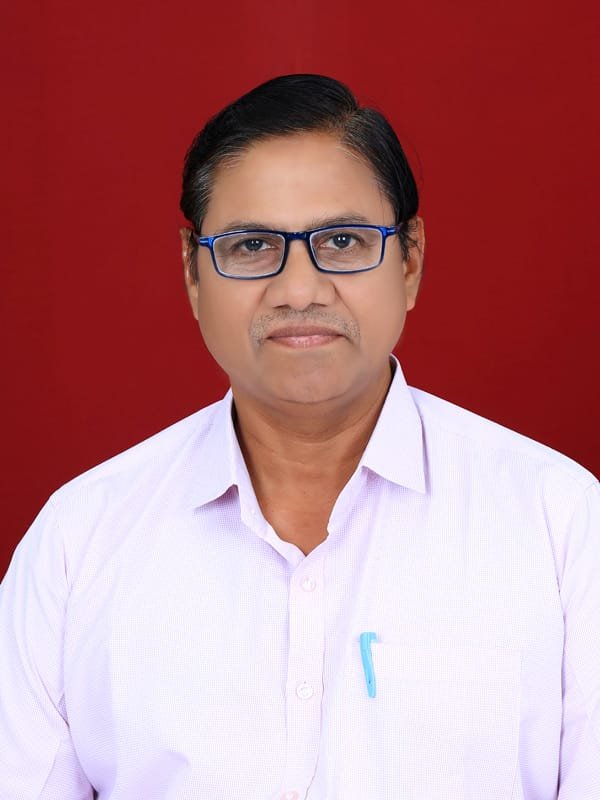
Mr. Pitchuka Sekhar

Mrs. B.V.K. Padmaja

Mr. Pothana L S Narasimharao

Mr. B. Vinay

Ms. K. Dhanyaja
L.J.N. Sree Lakshmi

Mrs. Ch. Sravanthi

Mrs. P. Gayathri